
Researchers at the University of Sheffield have developed a novel method for producing sustainable aviation fuel (SAF) using concentrated solar energy and captured CO2, potentially reducing reliance on used cooking oil.

The University of Sheffield has announced a major milestone in the push for greener aviation as it produces its first report from testing a new sustainable aviation fuel (SAF). The research is helping support the faster rollout of low-carbon jet fuels.

The support will be provided to oil-marketing companies (OMCs) in the form of interest-free advances through the ministry of petroleum and natural gas. The OMCs, in turn, will use the fund to provide ATF price stabilisation support to Indian carriers operating domestic and international flights.
Cooking oil is often discarded after being used for frying at home or in restaurants. However, a refinery of IndianOil has now won a certification to use the same oil to produce sustainable aviation fuel (SAF), the company chairman Arvinder Singh Sahney said.

A potential US-Iran peace deal, expected to be signed on June 19, is anticipated to ease geopolitical stress and benefit various sectors, particularly in India, with analysts suggesting investors await finer details before making significant moves.

Global oil prices fell on Thursday to their lowest levels since before the outbreak of the Iran conflict, offering a significant economic tailwind for India, the world's third-largest crude importer, by easing inflation risks, reducing the import bill and improving the government's fiscal position.

India has no plans to ration fuel supplies despite ongoing disruptions in global energy markets, according to a top oil ministry official. The country has maintained adequate inventories of crude products and LPG while diversifying imports to manage supply risks.

Aviation fuel prices for domestic airlines remain unchanged, providing stability for local carriers, while commercial LPG and 5-kg cylinders see a significant rate hike due to rising international energy costs.
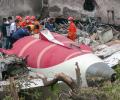
'...because that protects their aviation industry.' 'The Boeing 787 is one of the most widely-flown wide-body aircraft in the world, and Airbus is running neck-and-neck with Boeing.' 'Airbus is not going to let an opportunity like this pass.' 'If a software problem with the 787 is confirmed, they will use it to increase their own orders.'

Satinder Singh Sandhu, a supervisor with 108 Emergency Services, recounts the horrific scenes and his biggest regret from the AI-171 plane crash in Ahmedabad, which claimed 260 lives.

The Indian government has increased the export duty, or windfall tax, on diesel to Rs 55.5 per litre and on aviation fuel (ATF) to Rs 42 a litre, effective immediately, to boost domestic availability and prevent exporters from exploiting global price differences.
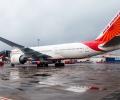
Air India group announces fuel surcharges on domestic and international flights due to rising Aviation Turbine Fuel (ATF) prices, following the government's decision to cap domestic ATF price hikes.

India's consumption stocks, which have outperformed the broader market, are now facing significant pressure due to a gradual rise in fuel prices and the potential for higher inflation. Analysts warn that companies may be forced to pass on increased input costs to consumers, potentially hurting demand across both staples and discretionary categories, with a looming threat of deficient monsoon rainfall further exacerbating inflationary concerns.

The reopening of the Strait of Hormuz, following a ceasefire agreement between the US and Iran, is expected to significantly ease India's crude oil supply risks, lower freight costs, and reduce inflationary pressures, as global oil prices have already dropped.

'We may be able to wind back some of the schedule reductions we'd taken in recent months.'

Civil Aviation Minister K Rammohan Naidu announced that public sector oil marketing companies will implement a partial and staggered increase in jet fuel prices for domestic airlines, aiming to protect passengers from steep fare hikes.
Indian carriers have cancelled over 10,000 flights since the onset of the West Asia conflict, as escalating tensions and airspace restrictions disrupted international operations, a senior government official said.

Akasa Air, despite facing headwinds from the West Asia conflict and rising aviation turbine fuel prices, expects to maintain a 30-40 per cent growth trajectory over the next five years and aims for an initial public offering (IPO) within two to four years, according to CFO Ankur Goel.

Aviation Turbine Fuel (ATF) prices have more than doubled to a record high, impacting airlines and consumers, while commercial LPG rates also see a significant increase.
The Federation of Indian Pilots (FIP) on Thursday renewed its demand for a judicial probe into the AI-171 crash and urged authorities not to release any interim investigation report, saying it would create further confusion and speculation.
India has significantly reduced Aviation Turbine Fuel (ATF) prices for international airlines by 27% due to easing global fuel benchmarks, while simultaneously increasing commercial LPG and 5-kg cylinder prices to record highs.

Indian benchmark stock indices, Sensex and Nifty, recorded their fourth consecutive day of declines, driven by selling in FMCG, financial, and auto sectors. The downturn is attributed to fresh tensions in the Middle East, uncertainty surrounding the US-Iran 60-day ceasefire, and elevated crude oil prices.
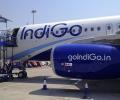
InterGlobe Aviation (IndiGo) is experiencing significant financial pressure, with its stock falling 18 per cent since the start of the Iran war, due to rising Brent crude prices, a weakening rupee, and disruptions to its West Asia and European flight networks caused by geopolitical tensions.

The Aircraft Accident Investigation Bureau (AAIB) has issued an interim statement on the probe into the Air India AI171 plane crash that killed 260 people last year, confirming that the investigation is ongoing and the final report will be released after all processes are complete.

Ahmedabad's Chief Fire Officer, Amit Dongre, reflected on the Air India flight AI-171 crash a year ago, describing the 10-hour rescue operation as the most challenging in his 22-year career, despite the tragic loss of 260 lives.

The Indian government has imposed a new windfall gains tax of Rs 3 per litre on petrol exports, while simultaneously reducing the levy on diesel to Rs 16.5 per litre and aviation turbine fuel (ATF) to Rs 16 per litre, effective May 16.

Air India and Air India Express are introducing a fuel surcharge on domestic and international flights due to rising jet fuel prices, impacting travel costs for passengers.

A year after the tragic Air India flight AI-171 crash in Ahmedabad claimed 260 lives, grieving families are still waiting for the final probe report, with investigators yet to release conclusive findings on the disaster's cause.

Flying high on the country's aviation industry boom, Indian Oil Corporation expects to continue its double digit growth in the aviation fuel business despite the entry of Oil and Natural Gas Corporation into the segment.

The Indian government has increased measures to secure fuel and gas supplies following the Strait of Hormuz closure, urging citizens to avoid panic buying. Refineries are operating at high capacity, and sufficient stocks of petrol and diesel are available nationwide.

Air India has deferred annual salary increments for its staff by at least one quarter and urged a "relentless focus on costs" due to external headwinds like the closure of Pakistan airspace, West Asia conflict, rupee depreciation, and a significant surge in aviation turbine fuel prices, though the airline has assured there will be no layoffs.

The Centre expects cooperation from the state governments to slash the surcharge and taxation on aviation fuel to control its prices, a senior Civil Aviation Ministry official said in New Delhi on Thursday.

Despite reporting a weaker-than-expected net loss of Rs 2,536 crore for Q4FY26, largely due to a significant non-cash forex loss, analysts remain optimistic about IndiGo's long-term prospects, citing strong demand trends, a favourable pricing outlook, and strategic cost-control measures.
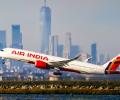
The UK's Civil Aviation Authority is investigating a fuel control switch issue on an Air India Boeing 787-8 at Heathrow Airport. The incident occurred before a flight to Bengaluru, prompting scrutiny from both UK and Indian aviation regulators.

Airlines are cutting not only international services but also domestic flights, especially on routes projected to remain unprofitable in the coming weeks due to weak demand and high fares.

In a statement, the airline said it has completed precautionary re-inspections of the Fuel Control Switch (FCS) across all operational Boeing 787 aircraft in its fleet.

Indian benchmark indices, Sensex and Nifty, closed sharply higher, with the Sensex climbing 1,695.40 points and the Nifty surging nearly 2 per cent, driven by a global market rally and a decline in crude oil prices following US President Donald Trump's declaration that his country has ended the war with Iran.

As India marks a decade of the Goods and Services Tax (GST), the focus is shifting towards enhancing efficiency through artificial intelligence, data sharing, and process simplification. The reform, which unified India's indirect tax system, has significantly broadened the tax base and boosted revenues, with future plans including a streamlined two-tier rate structure and continued technological integration to reduce compliance costs and combat evasion.

Air India, IndiGo and SpiceJet have told the government that the country's airline industry is under extreme stress and on the verge of "stopping operations", as they sought revision in ATF pricing and financial support.
